For years, the beauty industry has drawn a hard line between “skincare” and “makeup.” Skincare was the medicine; makeup was the mask. But in 2026, that line has officially vanished. At Dr. Liia, we believe that every product that touches your face should contribute to your Skin Longevity.
If you are wearing eyeliner for 12 hours a day, that’s 12 hours of potential treatment—or 12 hours of potential irritation. In this guide, we dive into the science of functional makeup, specifically focusing on the most delicate areas of your face: the eyes and the lips.
Part 1: The Eyelid—The Thinnest Skin on Your Body
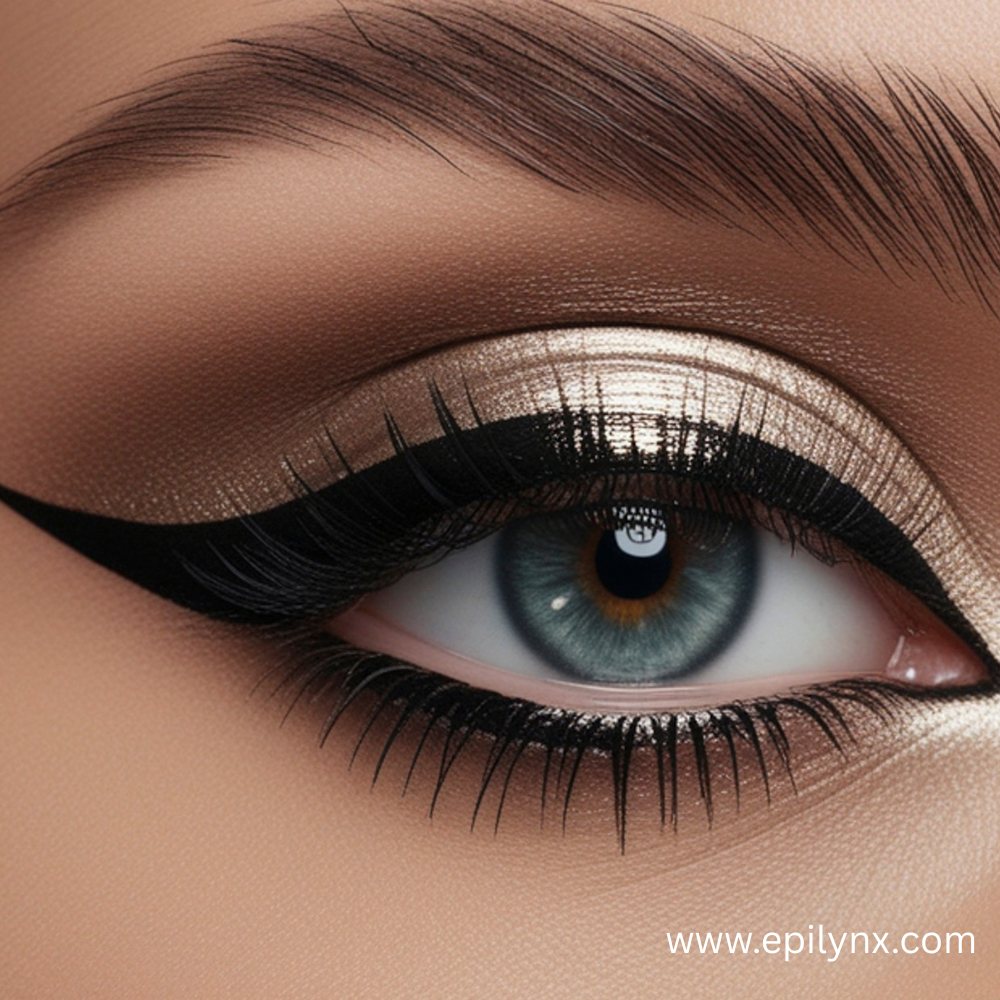
The skin on your eyelids is approximately 0.5mm thick. To put that in perspective, the skin on the rest of your face is about 2.0mm thick. Because it is so thin, it is incredibly vulnerable to two things: Oxidative Stress and Elasticity Loss.
The Problem with Traditional Eyeliners
Most mass-market eyeliners are formulated with harsh waxes and synthetic pigments that “tug” on the eyelid during application. This micro-trauma, repeated daily, accelerates the breakdown of the thin collagen fibers in the eye area. Furthermore, many waterproof formulas use “volatile silicones” that dehydrate the lash line, leading to brittle lashes and “crepey” lids.
The Dr. Liia Longevity Approach
A functional eyeliner should be a Serum-In-Liner.
Peptide Infusion: We look for peptides like Myristoyl Pentapeptide-17, which doesn’t just stay on the surface but helps support the look of thicker, healthier lashes.
Botanical Waxes: Instead of paraffin, use Candelilla or Carnauba wax infused with Vitamin E. This allows the liner to glide without “tugging,” protecting the structural integrity of the eyelid.
Chelating Agents: Because eyeliner sits so close to the tear duct, it’s vital to have agents that neutralize the heavy metals found in urban pollution, preventing “Digital Aging” of the eye area.
Part 2: The Lips—Why Your Balm is Making You Drier
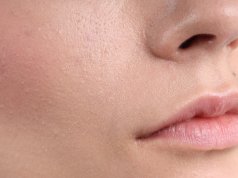
Did you know that lips do not have sebaceous (oil) glands or sweat glands? This means they have no natural “shield” to prevent moisture from evaporating. This is why “rebound dryness” is so common with traditional lip balms.
The “Petroleum Trap”
Many popular lip balms use petrolatum or mineral oil. While these are great at creating a “seal,” they don’t actually hydrate. They sit on top, and once they wear off, your lips are even drier than before because the skin has “forgotten” how to maintain its own moisture levels.
The 3-Step Functional Lip Strategy
To achieve true lip longevity, you need a formula that addresses the three pillars of lip health:
Humectants (The Water): Ingredients like Hyaluronic Acid pull moisture into the lip tissue, providing that immediate “plump” look.
Emollients (The Smooth): Squalane and Ceramides act as “biomimetic” lipids. Because your lips lack oil, you must provide the oil they cannot make themselves.
Occlusives (The Seal): Natural butters (like Shea or Mango) create a breathable barrier that stops Transepidermal Water Loss (TEWL) without clogging the delicate “vermilion border” (the edge of your lips).
[Image showing the “Vermilion Border” of the lips and the lack of oil glands compared to facial skin]
Part 3: 5 Things to Look For on Your Makeup Labels
To feel amazing and ensure your makeup is working for you, check the back of your bottles for these “Longevity Power Players”:
Squalane: The “perfect” lipid. It integrates into your skin barrier to repair it while providing a silky, non-greasy finish.
Niacinamide (Vitamin B3): Even in eyeliner, Niacinamide helps strengthen the skin barrier and protects against the blue light from your screens.
Sodium Hyaluronate: The salt form of Hyaluronic Acid. It has a smaller molecular size, allowing it to penetrate the thin skin of the lips and eyes more effectively.
Vitamin E (Tocopherol): A potent antioxidant that prevents the pigments in your makeup from oxidizing and turning “ashy” on your skin.
Bisabolol: Derived from Chamomile, this helps soothe the delicate eye area, preventing the redness and itching often associated with long-wear makeup.
FAQ: Functional Makeup Decoded
Q: Can functional makeup replace my skincare? A: Think of it as a “booster.” Your primary Dr. Liia serums do the heavy lifting at night, but functional makeup ensures that your skin stays in “repair mode” all day long.
Q: Why does my eyeliner smudge if it has “skincare” in it? A: Smudging is usually a result of poor “setting,” not the ingredients. Even with functional liners, we recommend “setting” the look with a tiny bit of matching shadow to lock the treatment into the skin.
Q: Is “Clean Makeup” always functional? A: No. “Clean” is about what isn’t in the product (like parabens). “Functional” is about what is in the product (like peptides and ceramides). At Dr. Liia, we are always both.
Q: How do I get my lipstick to stay on without drying out my lips? A: Use the “Prime & Paint” method. Apply a thin layer of functional lip balm, let it sink in for 2 minutes, blot, and then apply your lipstick. This creates a “hydration reservoir” under the color.