
The 2026 Discovery: Your Skin Has a Clock
Every cell in your skin has its own “circadian rhythm.” During the day, your skin is in Protection Mode (fighting UV and pollution). At night, it switches to Repair Mode (producing collagen and fixing DNA).
If you are looking at screens late at night or have an irregular sleep schedule, you are “confusing” your skin. It stays in Protection Mode 24/7, which leads to chronic inflammation, dark circles, and a broken moisture barrier.
The Power of Topical Melatonin & Peptides
In 2026, Topical Melatonin is trending as the “ultimate antioxidant.” Unlike the supplement you swallow, topical melatonin doesn’t make you sleepy—instead, it signals your skin cells to start their nighttime repair process.
The Benefit: It neutralizes the oxidative stress from the day and triggers the production of “Youth Proteins.”
The EpiLynx Edge: We combine these “Circadian Actives” with Gluten-Free Peptides to ensure that even the most sensitive skin can repair itself without the irritation caused by traditional night creams.
The “Golden Hour” Routine
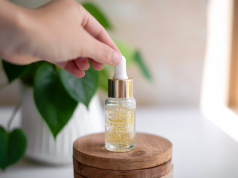
To maximize your results, your “Night-Flood” should happen two hours before sleep. This gives the pharmacist-formulated ingredients time to sink in before your body temperature drops for deep sleep.
FAQ: Circadian Rhythms and Nighttime Repair
Q: Does blue light from my phone really age my skin? A: Yes. Blue light suppresses the skin’s natural melatonin production. This “tricks” the skin into thinking it is daytime, stopping the repair enzymes from fixing the DNA damage caused during the day.
Q: Can I use Melatonin skincare during the day? A: While it isn’t harmful, it is most effective at night. During the day, your skin is busy defending itself. At night, it has the metabolic energy to actually use the melatonin for repair.
Q: Why do I wake up with red, puffy skin? A: This is often a sign of “Circadian Mismatch.” If your skin didn’t properly switch into repair mode, it retains fluid and inflammation. Using a Cica-infused night serum can help calm this “morning puffiness.”
Q: Is nighttime skincare more important for Celiac-prone skin? A: Yes. People with Celiac disease often have higher levels of systemic inflammation. Nighttime is the only window your body has to “flush” these inflammatory markers out of the skin tissue.
Q: What is the best ingredient for nighttime skin repair? A: Look for a combination of Bakuchiol (a gentle retinol alternative), Ceramides, and Peptides. These provide the “bricks and mortar” your skin needs to rebuild the barrier while you sleep.
Q: Will topical melatonin affect my sleep cycle? A: No. Topical melatonin is processed locally by the skin cells and does not enter the bloodstream in high enough concentrations to affect your brain’s sleep-wake cycle.